 by
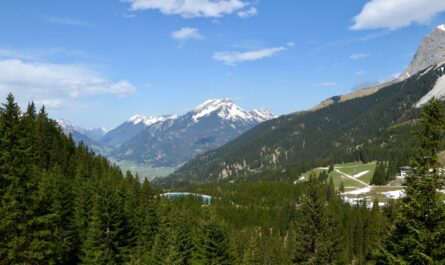
by High in the mountains, far from city lights and coastal haze, the night sky transforms into a breathtaking celestial panorama. The Alpine environment—whether in the European Alps, the Rockies, the Southern Alps of New Zealand, or other high-altitude ranges—offers some of the clearest and most awe-inspiring stargazing opportunities on Earth. For beginners, understanding alpine constellations is not only an introduction to astronomy but also a way to deepen one’s connection with the natural world.
This guide will walk you through the fundamentals of stargazing in alpine regions, how constellations shift with altitude and season, and practical tips to begin exploring the night sky from the mountains.
Why the Alpine Sky Is Special
1. Reduced Light Pollution
One of the biggest advantages of alpine stargazing is distance from urban centers. Artificial lighting obscures faint stars in cities, but in high-altitude regions, especially remote mountain valleys, the Milky Way becomes visible to the naked eye.

2. Clearer Air
At higher elevations, the atmosphere is thinner and contains less moisture and pollution. This results in sharper visibility and reduced atmospheric distortion, allowing stars to appear brighter and more defined.
3. Cooler Temperatures
Cold mountain air can stabilize atmospheric turbulence, improving “seeing” conditions for both the naked eye and telescopes.
Understanding Constellations
A constellation is a recognized pattern of stars forming a symbolic shape. Ancient civilizations used constellations for navigation, storytelling, agriculture, and religious traditions.

Modern astronomy officially recognizes 88 constellations covering the entire sky. While not all are easily visible in alpine regions at once, many prominent ones dominate mountain skies depending on the season.
Essential Constellations Visible in Alpine Regions
The specific constellations you see depend on your hemisphere. Below are common ones visible from alpine areas in the Northern Hemisphere, such as the European Alps or North American Rockies.
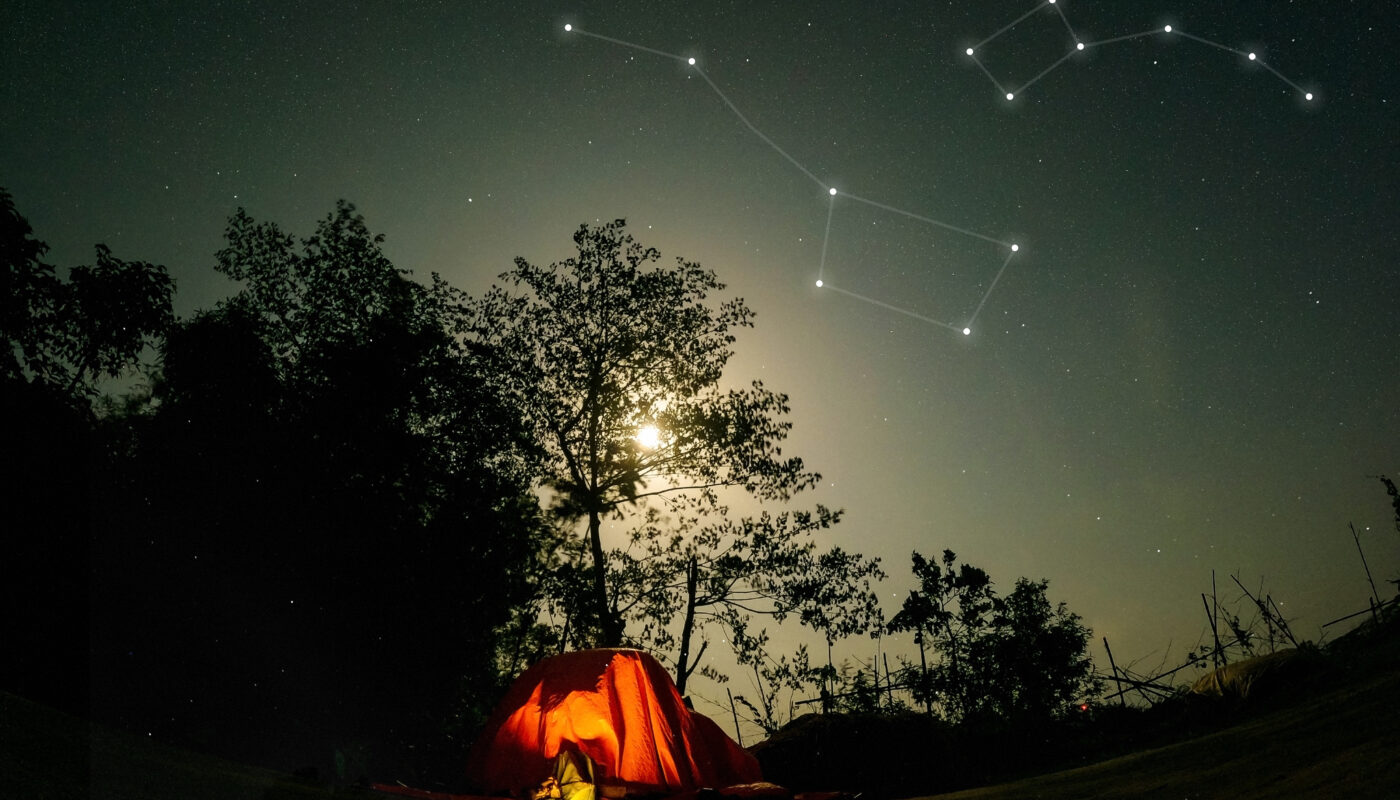
Ursa Major (The Great Bear)
Perhaps the most recognizable constellation, Ursa Major contains the famous Big Dipper asterism.
Why it matters:
- The two outer stars of the Big Dipper’s bowl point toward Polaris, the North Star.
- Polaris helps determine true north, useful in wilderness navigation.
In alpine environments, Ursa Major is often visible year-round at mid-northern latitudes.
Orion (The Hunter)
Best seen during winter months, Orion is one of the brightest and easiest constellations to identify.
Key features:
- Orion’s Belt (three aligned stars)
- The Orion Nebula (visible as a fuzzy patch even to the naked eye in dark skies)
In snowy alpine landscapes, Orion rising above mountain ridgelines creates a dramatic visual contrast.
Cassiopeia
Recognizable by its “W” shape, Cassiopeia sits opposite the Big Dipper around Polaris.
Why it’s useful:
- Helps locate Polaris when the Big Dipper is low on the horizon.
- Visible year-round in many northern alpine regions.
Cygnus (The Swan)
Prominent during summer months, Cygnus flies along the Milky Way.
Look for:
- The Northern Cross shape
- Bright star Deneb
In alpine settings with minimal light pollution, the Milky Way band running through Cygnus is spectacular.
Scorpius (Summer)
Visible in lower southern skies during summer.
Notable feature:
- Red supergiant star Antares
In high mountain valleys with unobstructed southern horizons, Scorpius appears dramatic and luminous.
Southern Hemisphere Alpine Constellations
The sky is very different in alpine regions like the Andes or the Southern Alps of New Zealand.
Crux (The Southern Cross)
A compact but distinctive constellation.
Why it’s important:
- Used for navigation to locate the south celestial pole.
- Prominent in dark southern alpine skies.
Centaurus
Contains Alpha and Beta Centauri, two bright guide stars near Crux.
Carina
Home to Canopus, the second-brightest star in the night sky.
Seasonal Changes in the Alpine Sky
One of the most fascinating aspects of mountain stargazing is how constellations shift with the seasons.
Winter
- Orion dominates.
- Clear, cold air improves visibility.
- Long nights provide extended viewing time.
Spring
- Leo rises higher in the sky.
- Big Dipper appears elevated.
Summer
- The Milky Way is most visible.
- Cygnus, Lyra, and Aquila form the “Summer Triangle.”
Autumn
- Pegasus and Andromeda become prominent.
- Cooler temperatures return for comfortable viewing.
Because alpine regions often have clear skies in autumn, it can be one of the best times for beginners.
How Altitude Affects Stargazing
Thinner Atmosphere
Less atmospheric scattering increases star brightness and clarity.
Faster Temperature Drops
After sunset, alpine temperatures can fall rapidly. Dressing in layers is crucial.
Reduced Humidity
Lower moisture reduces haze but may increase risk of frost forming on lenses and optics.
Beginner’s Guide to Identifying Constellations
Step 1: Start with a Star Map
Use a rotating star chart specific to your latitude. Ensure it matches your hemisphere.
Step 2: Locate a Landmark Constellation
Find an easily recognizable shape:
- Big Dipper (North)
- Southern Cross (South)
- Orion (Winter)
Step 3: Use “Star Hopping”
Once you identify one constellation, use it to locate nearby ones.
Example:
- From Orion’s Belt, trace upward to find Taurus.
- From the Big Dipper, follow the arc to Arcturus.
Step 4: Adjust to Darkness
Allow 20–30 minutes for your eyes to adapt. Avoid bright phone screens; use red light mode.
Essential Equipment for Alpine Stargazing
You don’t need expensive gear to begin.
Bare Eyes
Many constellations are clearly visible without tools in alpine darkness.
Binoculars
- Lightweight and portable.
- Excellent for viewing star clusters and the Milky Way.
Telescope
If hiking to a viewing site, consider:
- Compact refractors
- Lightweight tripods
Be mindful of weight and terrain.
Safety Considerations in Alpine Night Viewing
Stargazing in mountains requires preparation:
- Carry headlamps with red light settings.
- Inform someone of your location.
- Watch for sudden weather changes.
- Avoid unstable terrain at night.
Temperatures can drop dramatically, even in summer.
The Cultural Importance of Alpine Constellations
Throughout history, mountain communities have developed stories around constellations.
- Shepherds used stars to track seasons.
- Alpine travelers navigated by Polaris.
- Indigenous groups across mountain regions created rich mythologies tied to star patterns.
Understanding these cultural connections deepens appreciation for both astronomy and human heritage.
The Milky Way in Alpine Regions
Few experiences rival seeing the Milky Way arch across a dark alpine sky.
Best practices:
- Visit during a new moon.
- Avoid peak tourist seasons if seeking solitude.
- Position yourself away from valley towns.
In high-altitude areas, the Milky Way can cast faint shadows under optimal conditions.
Photography Tips for Beginners
If you want to capture constellations:
- Use a tripod.
- Shoot wide-angle (14–24mm).
- Set ISO between 1600–3200.
- Keep exposures under 20 seconds to avoid star trails (without tracking mounts).
Including mountain silhouettes adds scale and drama.
Common Mistakes Beginners Make
- Expecting constellations to look like textbook drawings.
- Not checking moon phase.
- Dressing inadequately for cold.
- Forgetting that constellations shift hourly due to Earth’s rotation.
Deepening Your Knowledge
As you grow more comfortable:
- Learn about star magnitudes.
- Explore meteor showers.
- Track planetary movements.
- Join alpine astronomy groups or guided stargazing events.
Final Thoughts
Understanding alpine constellations is about more than identifying star patterns—it is about experiencing the night sky in one of its purest forms. The mountains remove distractions, strip away artificial light, and reveal the cosmos in striking clarity.
For beginners, start simple. Learn one constellation at a time. Visit the same viewing spot in different seasons. Notice how the sky evolves. Over time, the patterns become familiar companions above the ridgelines.
In alpine silence, beneath countless stars, astronomy becomes personal. The constellations are no longer distant diagrams in a book—they are luminous landmarks woven into the vast darkness above snow peaks and rugged summits.